Explore Valley of Flowers and Hemkund Sahib in 2026: A Complete Trek Guide
August 11, 2026 · 10 min read · Valley of Flowers India Team
The Valley of Flowers and Hemkund Sahib sit on the same trail in Uttarakhand, share the same base village, and reward two very different kinds of traveller — which is exactly why so many people do them together. One is a UNESCO-listed alpine meadow that erupts in colour for a few short monsoon weeks. The other is a Sikh shrine on a glacial lake, higher than almost any place of worship on earth. Most trekkers reach both on a single Valley of Flowers Tour from Haridwar and Dehradun, walking the same forested path out of Govindghat before the trail splits. This guide covers what the route actually demands, when to go in 2026, and the practical details that don't make it into the brochures.
What exactly are the Valley of Flowers and Hemkund Sahib?
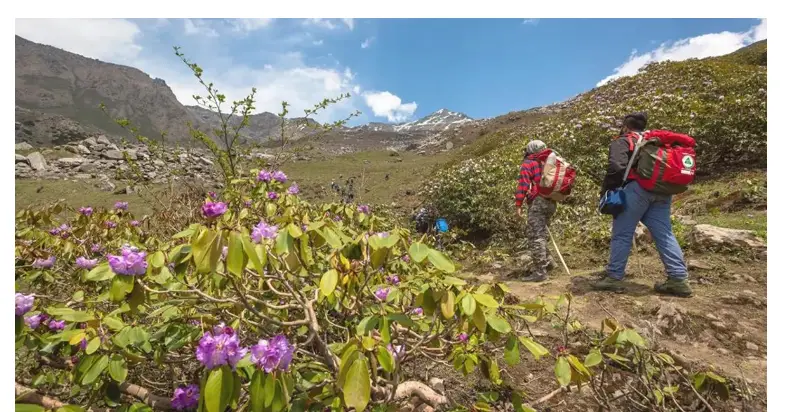
The Valley of Flowers is a national park and UNESCO World Heritage Site in the Chamoli district of the Garhwal Himalayas, famous for more than 500 species of wild alpine flowers that bloom across a hanging valley each monsoon. Hemkund Sahib is a Sikh gurudwara built beside a glacial lake at roughly 4,329 metres, dedicated to Guru Gobind Singh, the tenth Sikh Guru.
The two are linked by geography. Both treks begin at Govindghat, follow the same path to the village of Ghangaria, and only diverge there — the valley to the west, Hemkund to the northeast. The British mountaineer Frank Smythe stumbled onto the meadow in 1931 and gave it the name that stuck. Locals had long called it the Bhyundar Valley.
Quick facts at a glance
| Detail | Valley of Flowers | Hemkund Sahib |
|---|---|---|
| Type | UNESCO national park | Sikh pilgrimage shrine |
| Altitude | ~3,650 m (12,000 ft) | ~4,329 m (14,200 ft) |
| Base village | Ghangaria | Ghangaria |
| Distance from Ghangaria (one way) | ~3.5–4 km | ~6 km |
| Road head | Govindghat | Govindghat |
| Nearest railway | Rishikesh / Haridwar | Rishikesh / Haridwar |
| Nearest airport | Jolly Grant, Dehradun | Jolly Grant, Dehradun |
| Open in 2026 | 1 June – ~31 October | ~25 May – mid-October |
| Best time | Mid-July to mid-August | June, and Sept–early Oct |
| Permit / registration | Forest entry permit | Yatra registration |
When will the Valley of Flowers and Hemkund Sahib open in 2026?
The Valley of Flowers is expected to open on 1 June 2026 and stay open until around 31 October, while Hemkund Sahib opens earlier — around 25 May 2026, once the Indian Army clears the high snow off the trail. Hemkund's shrine doors typically close in the second week of October, before heavy snowfall returns.
Timing matters more here than on almost any other Himalayan trek. Early June is green but still sparse; the real bloom doesn't arrive until the monsoon does. For the flowers at their peak, mid-July to mid-August is the window, with fresh species opening week by week. The catch is that this is also the wettest, most crowded stretch. If your priority is Hemkund and clear mountain views over flowers, June and September are gentler.
How do you reach the trek from Haridwar and Dehradun?
Both Haridwar and Dehradun are the standard launch points, with Govindghat sitting roughly 275–300 km away by road — a long but scenic 9 to 11 hours through the river-confluence towns of the Garhwal. The drive runs via Rishikesh, Devprayag, Rudraprayag, Karnaprayag and Joshimath, hugging the Alaknanda for most of the way.
Most people break the journey at Govindghat for the night and start walking the next morning. A Valley of Flowers Tour from Haridwar and Dehradun usually bundles this transfer, since shared taxis and the mountain road are easier handled by an operator than solo. If you're driving yourself, leave early — landslide-prone stretches and afternoon weather can slow you down badly. The nearest airport is Jolly Grant in Dehradun; the nearest railheads are Rishikesh and Haridwar.
How to reach: route overview
The most common route begins from Haridwar or Dehradun:
Haridwar / Dehradun → Joshimath → Govindghat → Ghangaria → Valley of Flowers / Hemkund Sahib
Travellers looking for a VOF Tour from Haridwar and Dehradun often prefer starting from these cities for their excellent road, rail and air connectivity.
Where should you stay near Govindghat?
For a stay near Govindghat, you'll find basic hotels, guesthouses and a large gurudwara that offers simple lodging — comfortable enough for a night before the climb, but nobody comes here for luxury. Ghangaria, the actual base camp at the foot of both treks, has lodges, a few guesthouses and tented stays, plus dhabas for hot food.
| Where | Altitude | What it offers | Best for |
|---|---|---|---|
| Govindghat | ~1,828 m (6,000 ft) | Hotels, guesthouses, gurudwara, last reliable shops | The night before and after the trek |
| Ghangaria | ~3,050 m (10,000 ft) | Lodges, tents, dhabas, basic supplies | Sleeping close to the valley and Hemkund |
Book Ghangaria ahead in July and August. Beds fill fast, and walking up to find everything full is a miserable end to a long day.
What does the trek route actually look like?
The trek is gentler than its reputation suggests — until the final push to Hemkund. From Govindghat, a short shared-taxi ride of about 4–5 km drops you at Pulna village, the current motorable trailhead. From Pulna it's a paved, mostly gradual 9–10 km climb beside the Laxman Ganga to Ghangaria, passing Bhyundar village and a steady run of tea stalls.
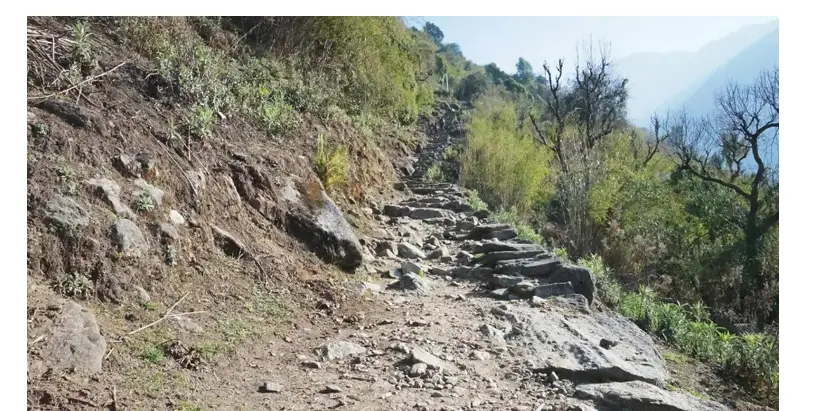
From Ghangaria the trail forks. The walk into the Valley of Flowers is an easy 3.5–4 km along the Pushpawati, ending in open meadow. The route to Hemkund is a different animal: roughly 6 km of relentless stone steps gaining over a kilometre of height. Here's how the two stack up.
| Feature | Valley of Flowers | Hemkund Sahib |
|---|---|---|
| What it is | Wildflower meadow walk | Steep pilgrimage climb |
| One-way distance from Ghangaria | ~3.5–4 km | ~6 km |
| Difficulty | Easy to moderate | Strenuous |
| Altitude reached | ~3,650 m | ~4,329 m |
| Overnight stay allowed | No (day entry only) | No (descend to Ghangaria) |
| Mules / ponies | Not allowed inside | Allowed |
| Best suited to | Nature lovers, photographers | Pilgrims, strong walkers |
Neither destination permits overnight stays, so both are done as day trips from Ghangaria and you return to the same bed each night.
Is a group departure better than trekking independently?
A group departure handles the logistics — permits, transport, accommodation, meals and a guide — so you simply show up and walk, which is why a VOF Group Departure suits first-timers and solo travellers well. Trekking independently gives you full control of pace and budget, but you arrange everything yourself, from the Govindghat transfer to the forest permit at Ghangaria.
| Factor | Group Departure | Independent |
|---|---|---|
| Permits & registration | Handled for you | You arrange at the counter |
| Cost | Higher, all-inclusive | Lower, pay-as-you-go |
| Pace & flexibility | Fixed schedule | Fully your own |
| Guide & safety support | Included | Hire locally if wanted |
| Solo traveller fit | Easy and social | Doable but more effort |
| Best for | First-timers, fixed dates | Experienced, flexible trekkers |
Pros of a group departure: fixed dates that fill quickly, shared costs, on-trail support, and no scrambling for beds in peak season.
Cons: less freedom, fixed timings, and you trek at the group's pace, not yours. A group departure is the simplest way to combine the Valley of Flowers and Hemkund Sahib in one trip; independent trekking rewards those who've done a Himalayan trail before and want to linger in the meadow longer than a schedule allows.
How tough is the climb, and how should you prepare?
The trail itself isn't technical, but altitude and the 6 km Hemkund climb are what catch people out. The Pulna–Ghangaria stretch is a long, manageable uphill; the Hemkund section is short but brutal on the legs, with thin air above 4,000 metres slowing everyone to a crawl on the last steps.
Start preparing four to six weeks out with cardio and stair work — your knees and lungs will thank you. Spend a night at Joshimath or Govindghat to begin acclimatising before you gain height. Watch for headache, dizziness or breathlessness; if it sets in, rest or descend rather than pushing on. Trekkers with back or knee trouble can hire a pony or porter from Pulna to Ghangaria, though ponies are barred inside the Valley of Flowers itself.
Tips most trekkers wish they'd known
- Go early into the valley. Entry opens around 7 a.m., and afternoon clouds usually swallow the meadow by early afternoon. Morning light is also far better for photos.
- Carry cash. ATMs are unreliable past Joshimath, and Ghangaria runs on cash.
- Expect patchy signal. Only BSNL and Jio work with any consistency around Ghangaria — tell people at home you'll be offline.
- Pack for rain, always. It's monsoon. A good poncho, waterproof shoes and a dry bag for electronics matter more than fancy gear.
- Don't skip the langar at Hemkund. The free community kitchen serves hot food at altitude, and the hospitality is part of the experience.
- Confirm permit fees before you go. Forest entry runs around ₹200 for Indian nationals and roughly ₹600 for foreign nationals (valid three days), but rates have been revised without notice — verify at the official portal or with your operator.
Expert insight: what people get wrong
The single most common mistake is treating this as one easy walk. People who breeze into the Valley of Flowers assume Hemkund will feel the same, then hit the stone steps and the altitude and badly underestimate both. The opposite error is rushing the valley — it isn't a viewpoint to tick off but a basin you walk into, and the flowers change every week of the season, so what you see in mid-July is not what blooms in late August. Build a buffer day if you can. Weather here cancels plans without warning, and a single washed-out morning shouldn't cost you the trek.
Conclusion
Done right, the Valley of Flowers and Hemkund Sahib give you two trips in one — a soft, colour-soaked meadow and a hard, high pilgrimage — off the same forested trail out of Govindghat. Go in the right window, respect the altitude on the Hemkund climb, and leave a buffer day for the monsoon's moods. Whether you book a group departure for the ease of it or trek independently for the freedom, the combination remains one of the most rewarding monsoon treks in the Indian Himalayas. Talk to our team to plan your 2026 dates.
Frequently asked questions
What is the best time to visit the Valley of Flowers and Hemkund Sahib?
Mid-July to mid-August for peak flower bloom. For clearer mountain views and a drier trail, June or September are better, though the flowers are fewer.
How many days do you need for both treks?
Plan six days from Haridwar or Dehradun — two for travel, and three to four on the trail covering Ghangaria, the valley and Hemkund, with a buffer day for weather.
Can beginners do this trek?
Yes, with basic fitness. The valley walk is easy to moderate; the 6 km Hemkund climb is strenuous, so a few weeks of cardio and stair training beforehand help a lot.
Is a permit or registration required?
Yes. The Valley of Flowers needs a forest entry permit, obtainable online or at the Ghangaria counter. Hemkund Sahib requires yatra registration via the Char Dham portal or offline counters at Haridwar, Rishikesh and Rudraprayag.
Can I take a helicopter to the Valley of Flowers or Hemkund Sahib?
Helicopters fly only from Govindghat to Ghangaria (around ₹7,000–8,000 round trip, weather permitting). From Ghangaria you still trek to the valley or Hemkund — there is no direct helicopter to either.
Where is the trek base, and where do you sleep?
Govindghat is the road head; Ghangaria is the base camp where you stay overnight. Neither the valley nor Hemkund allows overnight stays, so you return to Ghangaria each evening.
How far is the trek from Govindghat?
From Govindghat (via Pulna) it's about 9–10 km to Ghangaria, then 3.5–4 km to the valley or 6 km to Hemkund — roughly 19 km one way to Hemkund.
Are ponies and porters available?
Yes, from Pulna up to Ghangaria, and on the Hemkund route. Ponies are not permitted inside the Valley of Flowers, which must be walked.
Is it safe during the monsoon?
Generally yes, but landslides and slippery trails are real risks. Travel with a trusted operator or guide, start early, and keep a flexible buffer day in your plan.
Can I do just one of the two?
Absolutely. Many visitors do only the Valley of Flowers or only the Hemkund Sahib climb, but since both share the same base at Ghangaria, combining them adds little extra travel for a second, very different experience.