Valley of Flowers with Ghangaria Guide 2026
Ghangaria is the one village every Valley of Flowers with Ghangaria traveller passes through — your base for the valley and for Hemkund Sahib.
Most people spend weeks researching the Valley of Flowers with Ghangaria trek and barely think about the village itself until they are already on the trail. That is a mistake worth avoiding.
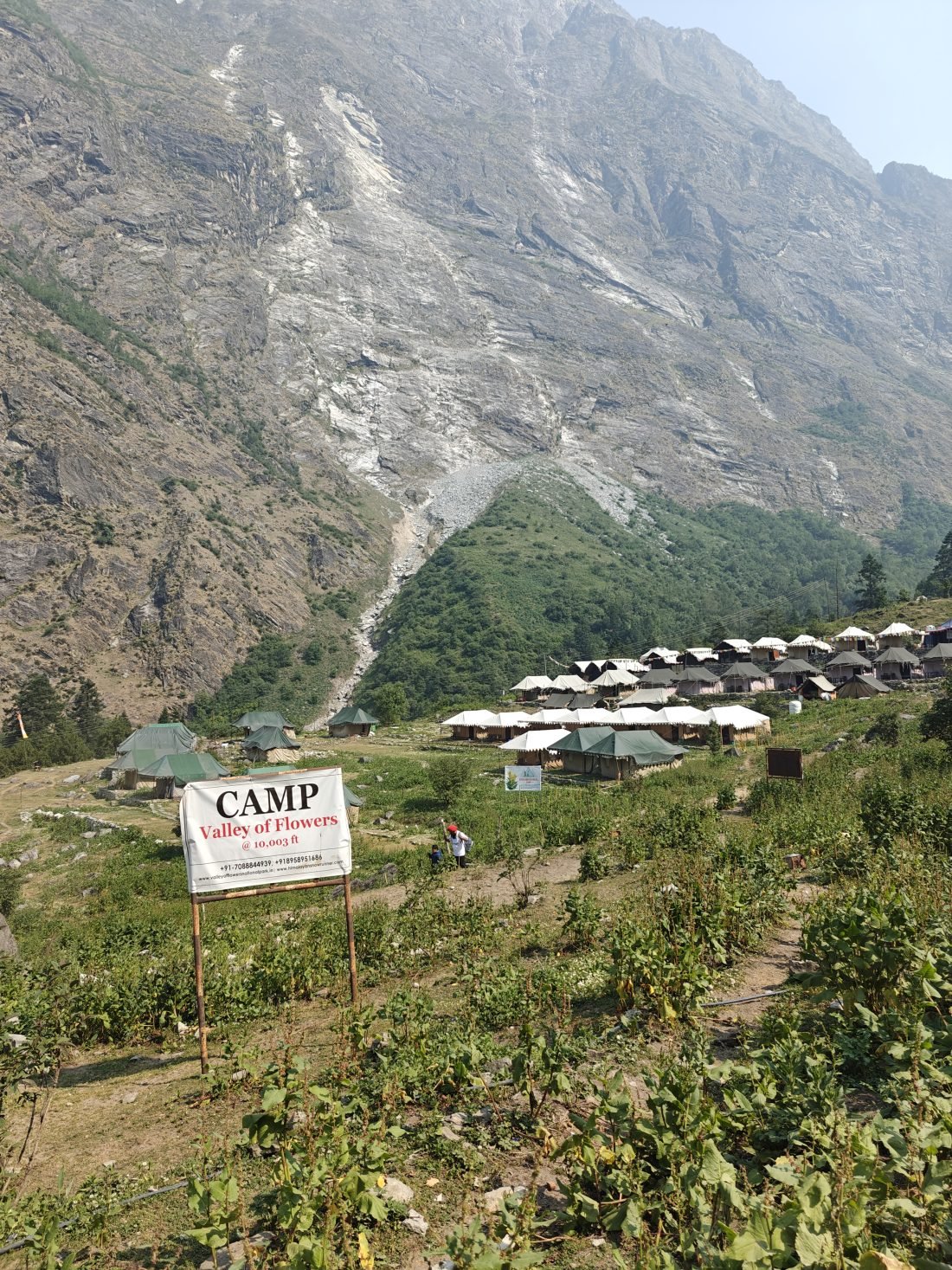
Ghangaria is the only base camp on the entire Valley of Flowers with Ghangaria route. Every trekker heading to the Valley of Flowers and every pilgrim heading to Hemkund Sahib stays here — there is no other option. At 3,050 metres, this small seasonal Himalayan village opens in June, closes in October, and in between becomes one of the most alive and warm places you will encounter in the mountains.
Wake up here on a clear morning with mist sitting in the valley below and the Pushpawati river audible somewhere in the dark, and you will understand why people remember Ghangaria long after they have forgotten the effort of getting here. This guide covers everything you need: accommodation, hotel booking, the two day-treks, the best time to go, and what to know before you arrive.
Book Your Valley of Flowers Trek — from ₹11,500
Stays at Ghangaria, permits, meals & certified Garhwali guides — all handled. ★ 4.8 from 512 trekkers · trusted since 2009.
Why Ghangaria Matters for Valley of Flowers Travellers
There is no shortcut around Ghangaria. The national park entry is 4 kilometres away. There is no accommodation inside the park. No road reaches the valley. Every single person on the Valley of Flowers with Ghangaria route passes through here and spends at least two nights.
The ghangaria valley of flowers connection is purely geographical — but what makes the village more than a functional stop is its atmosphere. Sikh pilgrims on a lifelong journey, botanists chasing rare species, first-time trekkers from cities, and local Garhwali families who have run guesthouses here for generations all share the same narrow lanes and the same dhabas. It creates something genuinely warm that most trekking base camps never manage.
It helps to picture the geography. The Valley of Flowers National Park — a UNESCO World Heritage Site — has no gateway town of its own, so Ghangaria does that job for the entire Valley of Flowers with Ghangaria region. Get your stay here right, and the two great day-treks fall easily into place.
About Ghangaria Village
Ghangaria sits in Chamoli district, Uttarakhand — 14 kilometres from Govindghat by trail, reachable only on foot or by helicopter. No roads. No vehicles. The whole village, and the entire Valley of Flowers with Ghangaria route around it, exists on foot traffic alone.
It is seasonal by nature. Families come up from lower villages every June and go back down every October. Outside those months, the place is empty — and that impermanence is part of what makes staying here feel so specific and memorable.
Facilities are basic but sufficient: guesthouses, small restaurants, a medical post, a GMVN rest house, the national park permit office, and a small market for last-minute supplies. BSNL has the most reliable mobile signal, electricity runs on generators for a few hours each evening, and there are no ATMs — carry cash from Joshimath.
How to reach Ghangaria
There is no road to Ghangaria — every Valley of Flowers with Ghangaria traveller arrives on foot from Govindghat, or by helicopter in season. Here is the full approach:
By helicopter: in season, helicopters shuttle between Govindghat and Ghangaria, cutting the 14 km approach to a few minutes — popular with pilgrims short on time or unable to trek the full distance. Seats are limited and weather-dependent, so book early and keep a buffer day. From Ghangaria you still walk out to the Valley of Flowers and to Hemkund Sahib on foot.
Ghangaria Accommodation Options
Ghangaria accommodation covers a practical range for a village this remote. Because it is the single base camp for the whole Valley of Flowers with Ghangaria area, rooms in every category get booked out fast in peak season. Here is what you will find:
- Budget guesthouses — the most common option. Simple rooms, basic bedding, run by local families who know exactly what trekkers need.
- GMVN Tourist Rest House — the most reliably bookable option in advance, and a solid choice for families.
- Deluxe private guesthouses — a few offer attached bathrooms and slightly more comfort.
- Group dormitories — dormitory-style accommodation for larger parties.
Across all categories, expect clean, functional and honest. Do not expect hotel-style comfort — at 3,050 metres after a long day on the trail, you will not miss it.
Ghangaria Hotel Booking Guide
On the Valley of Flowers with Ghangaria route, your bed in Ghangaria is the one thing you cannot improvise. Ghangaria hotel booking feels easy to leave until later — and then suddenly becomes urgent. In July and August the village fills completely: every bed, every category.
Book at least 4 to 6 weeks ahead for peak season (July–August). For June and September, 2 to 3 weeks is usually enough. GMVN properties can be booked online through their official website; private guesthouses typically require a phone call or a local agent, and most are not on major travel platforms.
Before you confirm a booking
- Meal inclusion — most quote room + dinner + breakfast
- Bathroom type — attached vs shared varies widely
- Generator hours — when you'll actually have power and light
- Hot water — often bucket-only, sometimes chargeable
- Cancellation terms — weather and landslides can change plans
- Distance from the helipad and trailhead within the village
Ghangaria to Valley of Flowers Trek
Of the two day-treks on the Valley of Flowers with Ghangaria route, this is the gentle one. The ghangaria valley of flowers trail is 4 kilometres one way — a well-marked path following the Pushpawati river into the national park. Most people take 1.5 to 2.5 hours to reach the valley entrance. The total return distance is 8 kilometres, the difficulty is easy, and it is suitable for children, older travellers and first-timers.
Give yourself a full day here. The valley rewards slow walking. For the full trail breakdown and bloom calendar, read our dedicated Valley of Flowers trek guide.
Ghangaria to Hemkund Sahib Trek
The second day-trek on the Valley of Flowers with Ghangaria route is the harder, higher one. The ghangaria to hemkund sahib trail climbs 6 kilometres north to the sacred lake and Gurudwara at 4,329 metres. The elevation gain is approximately 1,279 metres on steep stone steps. One way takes 3 to 4 hours; the full return is 6 to 8 hours.
The Ghangaria to Hemkund Sahib trek is rated moderate to challenging, but every season elderly pilgrims in their seventies and eighties complete it steadily. Pony and doli services are available. Start by 6 am to catch clear skies before the afternoon clouds arrive. For the combined plan, see our Valley of Flowers & Hemkund Sahib guide.

Best Time to Visit Ghangaria
Ghangaria's season mirrors the Valley of Flowers with Ghangaria bloom calendar exactly — here is how each month compares:
| Month | Flowers | Weather | Crowds |
|---|---|---|---|
| June | Early blooms | Cool, some rain | Low |
| July | Peak bloom | Monsoon, misty | High |
| August | Maximum, Brahma Kamal | Wet, lush | Very High |
| September | Fading, still beautiful | Clear, crisp | Moderate |
| October | Season closing | Cold | Low |
June brings the first blooms and the quietest trails — cool, occasionally wet, with snow still on the higher ridges. July is when the valley properly wakes up: peak bloom begins and the pilgrimage season picks up pace, though the monsoon means misty days and the odd washout.
August is the best month overall — maximum blooms, Brahma Kamal, the valley at its lushest. September is the best-kept secret on this route: quieter trails, clear skies, and mountain views that peak season never quite delivers. Whenever you come for the Valley of Flowers with Ghangaria, remember that the village opens in June and closes in October.
Things to Know Before You Arrive
Ghangaria is remote and seasonal, so a little preparation goes a long way on the Valley of Flowers with Ghangaria trek. Keep these essentials in mind:
- No ATMs in Ghangaria — carry enough cash from Joshimath
- BSNL has the most reliable mobile network
- Generator electricity runs a few hours each evening — bring a power bank
- Basic medical post available; high-altitude evacuation insurance is strongly advised
- Single-use plastics are banned inside the national park
- Temperatures drop sharply after sunset — warm layers are essential in any season
Frequently Asked Questions
What is the Valley of Flowers with Ghangaria trek?
Ghangaria is the only base camp for the Valley of Flowers with Ghangaria region. Every trekker heading to the Valley of Flowers and every pilgrim heading to Hemkund Sahib stays in this small Himalayan village at 3,050 metres, then walks out to each destination on separate days.
Where is Ghangaria located on the Valley of Flowers with Ghangaria route?
Ghangaria sits in Chamoli district, Uttarakhand, at 3,050 metres — fourteen kilometres from Govindghat by trail, accessible only on foot or by helicopter. It is the base camp for both the Valley of Flowers and Hemkund Sahib.
How far is Ghangaria from the Valley of Flowers?
Four kilometres one way. The return day trek covers 8 kilometres and takes around 5 to 6 hours including time spent in the valley. The trail is gentle and well-marked.
What accommodation is available in Ghangaria?
Budget guesthouses, the GMVN Tourist Rest House, and a few deluxe private guesthouses, plus dormitory options for larger groups. All are functional rather than luxurious. GMVN is the easiest to book online in advance.
How do I make a Ghangaria hotel booking?
Book GMVN properties online through their official website; private guesthouses usually require a phone call or a local agent. Book 4 to 6 weeks ahead for July and August travel, and 2 to 3 weeks ahead for June and September.
How far is Ghangaria to Hemkund Sahib?
Six kilometres one way, 12 kilometres return, with an elevation gain of about 1,279 metres on steep stone steps. The full return trek takes 6 to 8 hours. Pony and doli services are available.
What is the best time to visit Ghangaria and the Valley of Flowers?
August is the best month overall for maximum blooms; September is the quietest with clear skies and the best mountain views. Ghangaria opens in June and closes in October.
Is Ghangaria suitable for families?
Yes. The Valley of Flowers trek is gentle, a medical post is available, and accommodation suits groups of all sizes. Children and elderly travellers visit Ghangaria regularly every season.
Valley of Flowers Trek Cost (via Ghangaria)
All treks are based at Ghangaria. 2026 per-person pricing — all-inclusive from Haridwar, on triple / quad sharing:
Plan Your Valley of Flowers with Ghangaria Trip 2026
Ghangaria is small, simple and seasonal — and somehow that is exactly what makes it unforgettable. It is the warm, lamp-lit pause between two of the most beautiful days you will spend in the Himalaya: one among the flowers, one beside the sacred lake.
Get the booking and logistics right and the rest takes care of itself. If you would like the stays, permits, meals and guides all handled for you, our team plans the complete Valley of Flowers with Ghangaria trip — so all you have to do is arrive and walk.